In short
Rainbow trout feed best between roughly 12 and 18 degrees Celsius, which is 54 to 64 Fahrenheit. Above about 20 degrees Celsius, or 68 Fahrenheit, stress rises quickly and released fish frequently do not survive. The Upper Sacramento can exceed that in its lower canyon on August afternoons. The spring fed Lower McCloud usually does not, which is why it is the August river.
Why temperature matters so much
Trout are cold blooded, so water temperature sets the speed of their metabolism, and cold water holds more dissolved oxygen than warm water does. Those two facts pull in opposite directions as a river warms: the fish needs more oxygen precisely as the river supplies less. That is the whole story of a hot afternoon on a low river.
Below about eight degrees Celsius, trout feed slowly and in short windows, usually in the warmest hours. In the middle band they feed actively and fight hard. Above roughly twenty degrees they stop being able to recover from exertion, and a fish that swims away strongly can still die hours later.
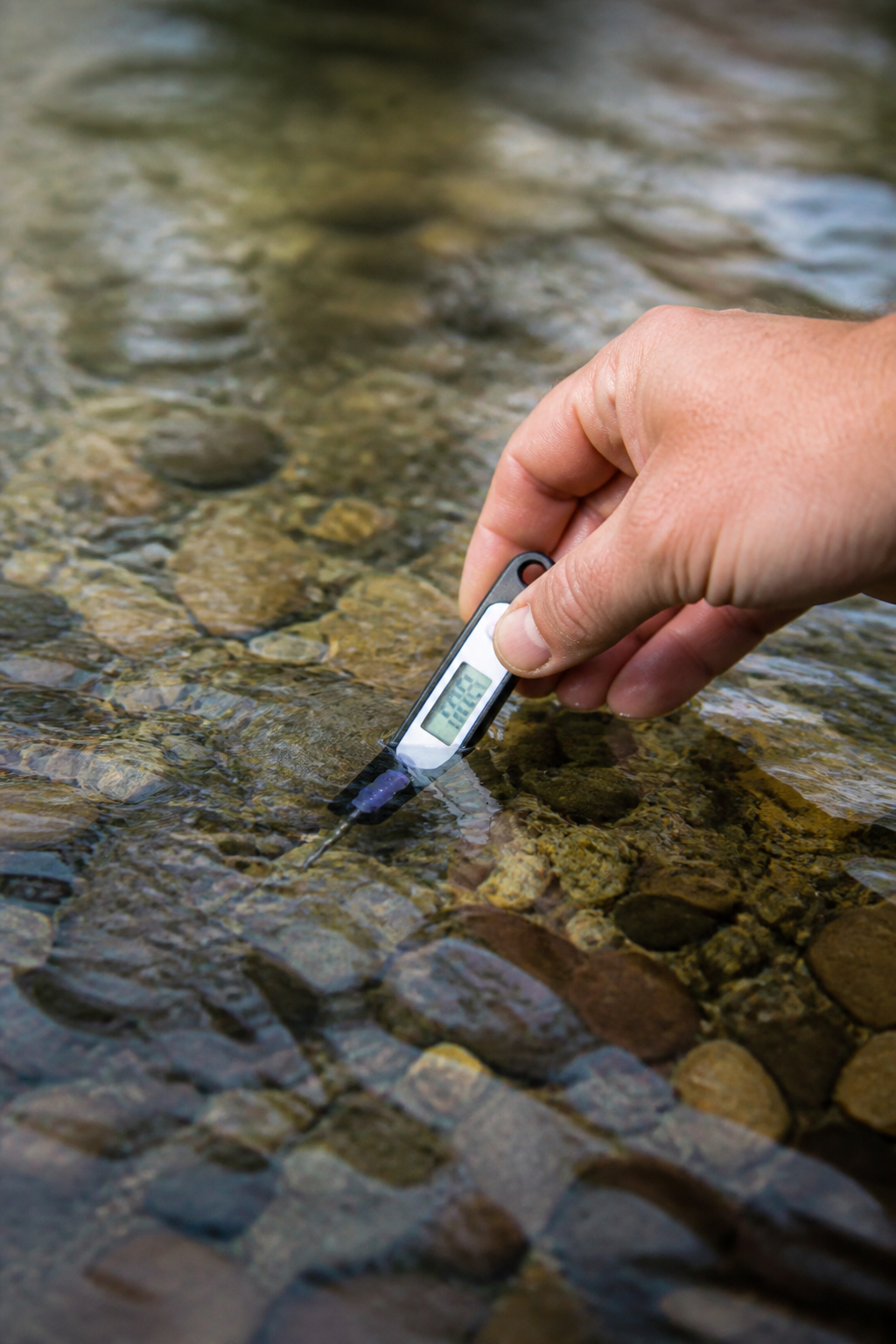
Measuring it properly
A stream thermometer is a small piece of equipment that changes how you fish. Use it well:
- Take the reading in flowing water, not in a shallow backwater that has been baking in the sun.
- Give it a full minute to settle.
- Read it again at midday and in the late afternoon. The daily swing is the useful information, not the single number.
- Take one reading at your access point and one at the coldest inflow you pass. The difference tells you where the fish will be.
Note that many public gauging stations also publish water temperature continuously, which is worth checking before you leave home. Which sources publish what is covered in how to read a fishing report.
Two rivers, two thermal characters
The Upper Sacramento is a rain and snowmelt river running through a low, steep, south facing canyon. In summer it collects heat all the way down: the water at the head of the canyon near Mount Shasta City is meaningfully colder than the water near Shasta Lake, and the difference grows through the afternoon. In a hot, dry August the lower canyon reaches can pass the twenty degree line while the upper reaches are still comfortable at dawn.
The Lower McCloud is different by construction. Cold springs feed it continuously, and the volume of that inflow is large relative to the river, so the daily temperature swing is small. It is the reason a fishing plan for this area should always keep the McCloud in reserve for the hottest days, a point developed on the trip planning page.
Handling fish in warm water
If you do fish at the upper end of the comfortable range, the way you handle a trout matters more than usual.
- Use stronger tippet than the conditions demand so that you can land fish quickly rather than playing them to exhaustion.
- Keep the fish in the water. Unhook it in the net, in the river.
- Wet your hands before any contact, and never hold a trout by the gills or squeeze it.
- Pinch the barbs, which is required on much of this water anyway and makes release faster everywhere else.
- Hold it facing into the current until it swims off under its own power, and watch that it does.
Knowing when to stop
The decision to put the rod down is not complicated once you have a number. Above twenty degrees Celsius, the fishing is no longer a fair exchange. In practice that means, on a hot week in August, fishing the Sacramento from first light until mid morning, then either moving to the McCloud canyon or spending the afternoon somewhere with shade and a cold drink.
Dry years make this the normal shape of a summer day rather than an occasional inconvenience, as described on the page about drought years and low water. When the season turns and the water cools again, everything relaxes: autumn on these rivers is the reward for a disciplined August.