Techniques and reading water
Reading the water, and fishing it properly
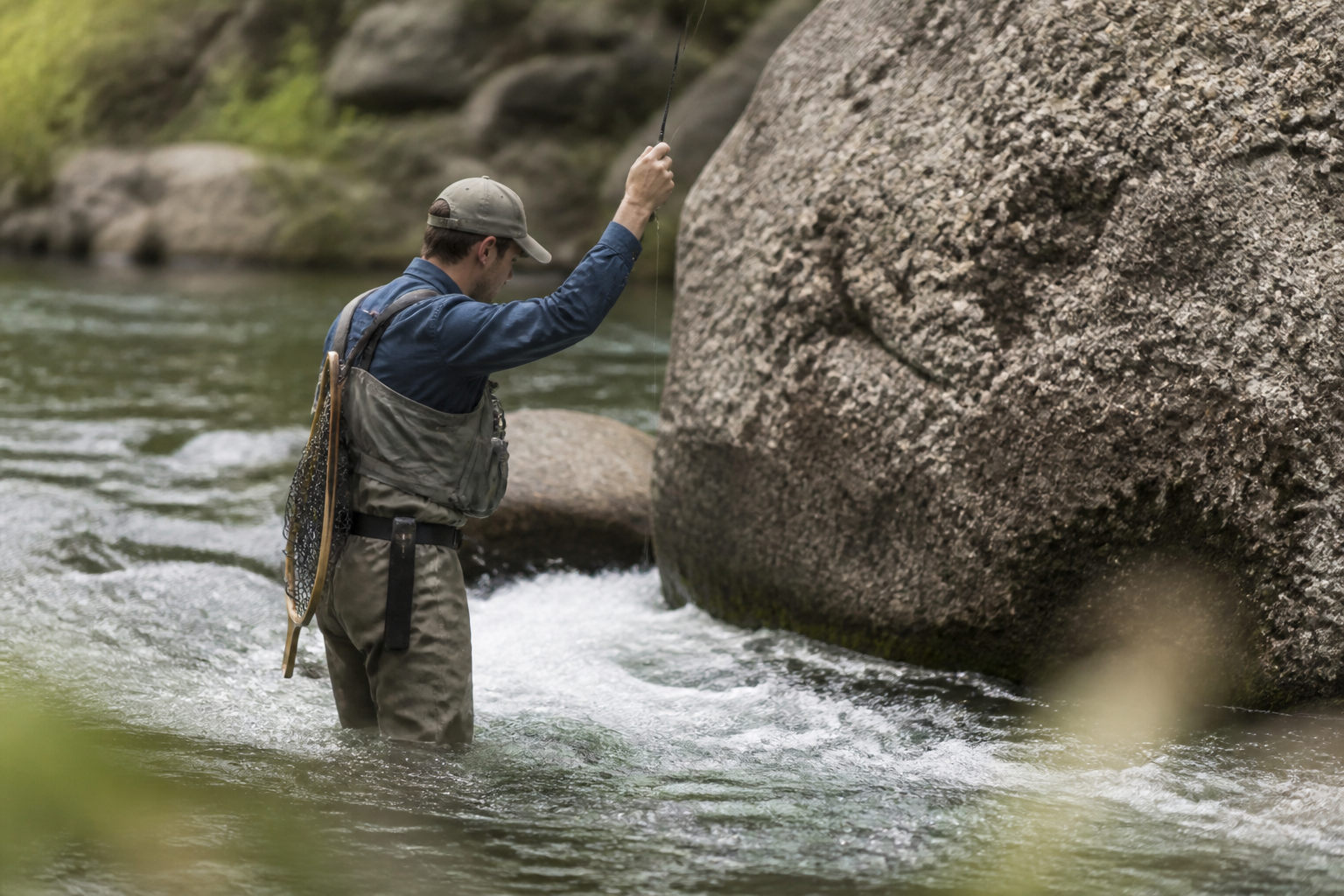
Both of these rivers are steep, boulder strewn and fast. They punish long casts and reward short, controlled ones. Most anglers who struggle here are not fishing the wrong fly, they are fishing too much water at once and drifting none of it well.
In short
Fish close. Break the river into single seams the length of a car, drift each one two or three times with a fly that is genuinely on the bottom, then move upstream. Short line nymphing, dry dropper in summer and a swung soft hackle in the evening will cover almost everything these rivers offer.
What to look at when you arrive
Pocket water looks chaotic and is not. Every boulder produces the same three features, and trout use them in the same order.
- The cushion in front of the rock. Water piles up and slows before it splits. Fish sit there in high flows and it is almost always fished last, if at all.
- The seam beside the rock. Fast water beside slow water, with the food travelling in the fast lane and the fish sitting in the slow one. This is where most of the trout are.
- The tail of the slack behind the rock. Comfortable, but the food arrives late and mixed. Good in summer, less good when the river is up.
Add the tailout of a pool, where the water shallows and speeds up before the next drop, and the soft edge under an overhanging alder, and you have the whole vocabulary. Everything else is a variation.
How to fish the Upper Sacramento River for beginners
A first day on this river goes well if it is deliberately small. The mistake is to treat a freestone canyon like a meadow stream and wade into the middle of it.
- Park somewhere with a footpath. The signed access points around Dunsmuir and Castella exist because the bank is otherwise steep or fenced. Start where the walking is easy, listed on the Dunsmuir access points page.
- Start at the downstream end and fish upstream. Trout face into the current. Walking up behind them keeps you out of sight and lets your fly arrive before your leader.
- Rig heavy and short. A nine foot leader, a weighted nymph and a smaller dropper, no more than a rod length and a half of line out. If you are not touching bottom occasionally, add weight.
- Fish one seam at a time. Two or three drifts, then take one step. A hundred metres of bank fished properly will out produce a kilometre covered quickly.
- Watch the line, not the fly. Takes in fast water are a hesitation, not a pull. If the leader stops or changes speed, lift.
- Wade less than you think. The bed is round rock, algae covered by late summer, and the current is stronger than it looks. A wading staff is not an admission of weakness on this river.
The three methods that cover the year
Short line nymphing is the default from autumn through spring and at any time when the water is up. The rod is held high, the line is kept largely off the water, and the flies are tracked through the seam at the speed of the current. It is explained in detail on the nymphing page.
Dry dropper takes over in summer. A buoyant dry fly with a small nymph hung eighteen inches to three feet below it covers the surface and the top of the water column at once, and it is far easier to control in pocket water than an indicator rig.
The swung soft hackle is the evening method, and it is the one most anglers never learn. Cast across and slightly down, let the fly swing below you on a tight line, and hold on. During a caddis emergence it can be devastating, because it imitates exactly what the insect is doing.
What changes on the McCloud
The McCloud is deeper, darker and colder, with fewer but larger holding places. Drifts are longer, weight is heavier, and the walk between spots is measured in minutes rather than steps. The canyon holds shade until well into the morning, which means the fishing day starts later and the evening lasts longer than the clock suggests. Fish there tend to be fewer and better, and the river asks for more patience per cast.
Some of what is said about both rivers in tackle shops and on forums does not survive contact with the water. The page on what people say about these rivers takes the most repeated claims and separates the ones that hold up from the ones that do not.
The two pages in this section
Method and water reading
-
19/07/2026
Nymphing techniques for the Upper Sacramento River
Rig, weight, drift length and the four faults that cost the most fish in fast pocket water.
-
12/07/2026
What people say about these rivers, and what holds up
Seven claims you will hear about the McCloud and Upper Sacramento, checked against what is actually documented.