In short
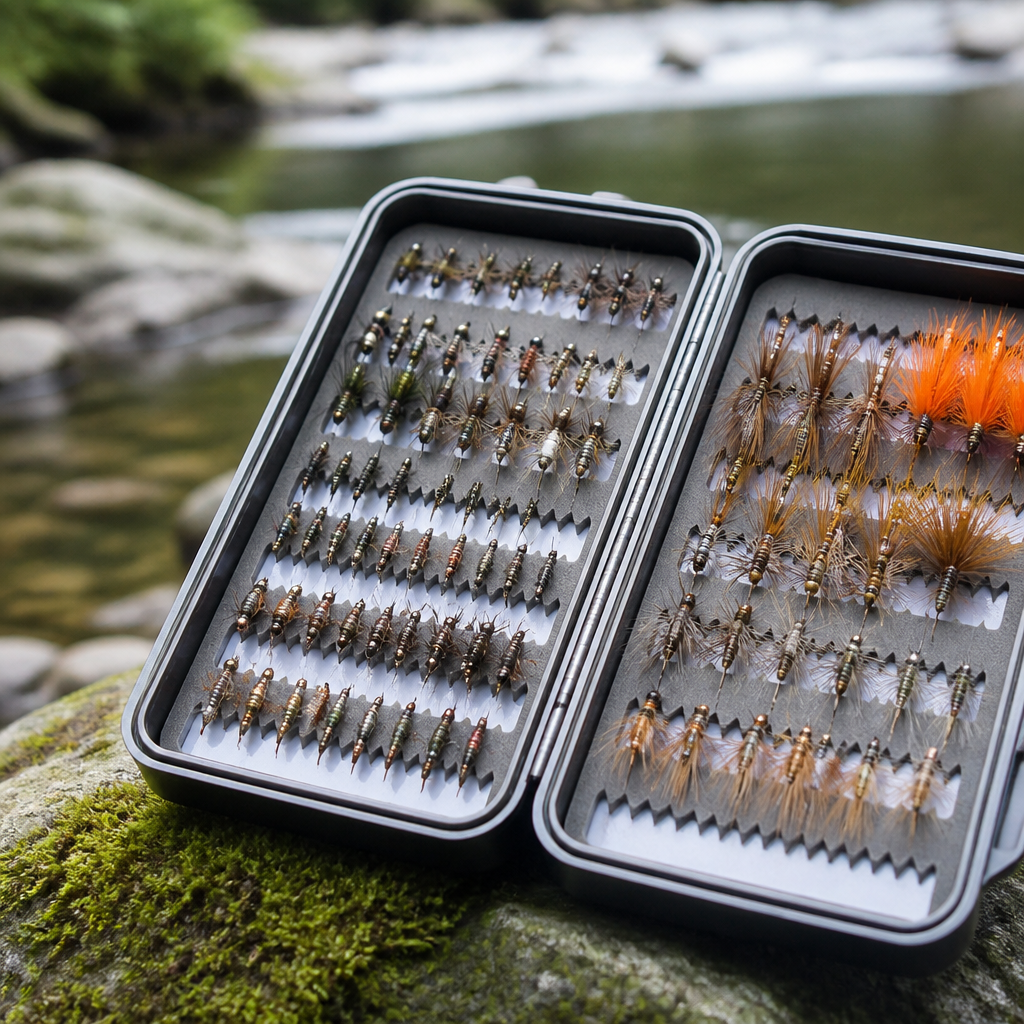
Carry heavy stonefly nymphs, beadhead mayfly nymphs in several sizes, caddis pupae and soft hackles, one or two large buoyant dries, and a dark streamer. Two dozen flies in three or four sizes each will cover the McCloud from May to October. Weight and depth matter more than pattern.
Why the box is different here
Three features of the river drive the selection. First, depth: the canyon runs are deeper than they look, and a fly that would fish beautifully on a shallow freestone riffle will never reach the fish. Second, light: the canyon is shaded for much of the day, so contrast matters more than exact imitation. Third, the trout: wild fish that see relatively few anglers but live in a productive river, willing to move for a good drift and quick to reject a bad one.
The result is a box weighted toward heavy nymphs, with a small number of dry flies that are large enough to see in broken shade.
The starter box
| Category | Pattern type | Sizes | When and why |
|---|---|---|---|
| Anchor nymph | Heavy golden stonefly nymph, tungsten bead or lead wire | 8, 10, 12 | All season. Gets the rig down and is eaten in its own right |
| Anchor nymph | Dark rubber legged stonefly | 8, 10 | High or coloured water, and any time you need contrast |
| Mayfly nymph | Pheasant tail, beadhead | 12, 14, 16, 18 | The universal dropper. Carry more of these than anything else |
| Mayfly nymph | Hare's ear, beadhead | 12, 14, 16 | Slightly buggier, better in off colour water |
| Caddis pupa | Green or olive bodied pupa with a bead | 14, 16 | May to September, the most eaten insect of the summer |
| Soft hackle | Partridge and green, partridge and orange | 12, 14, 16 | Swung across the current at dusk during a caddis emergence |
| Attractor nymph | Anything with a hot spot or a bright collar | 14, 16 | Low light in the canyon, and the first fly to try in a new run |
| Midge | Small dark pupa | 18, 20 | Winter, and the flat tails of pools in summer |
| Dry fly | Large buoyant attractor, high visibility post | 10, 12 | Summer, and as the indicator on a dry dropper rig |
| Dry fly | Elk hair caddis | 14, 16 | Evenings, May to September |
| Dry fly | Orange bodied October caddis adult | 8, 10 | September and October, the last hour of light |
| Dry fly | Small parachute mayfly, olive or grey | 16, 18 | Autumn and spring, overcast afternoons, slower water |
| Streamer | Dark weighted streamer, olive or black | 4, 6 | High water, autumn browns, and the deepest canyon runs |
Weight is a fly choice
The most common mistake on this river is fishing the right fly two feet above the fish. In a canyon run of any depth the nymph needs to be genuinely on or near the bottom, and that means either a heavy anchor fly or added weight on the leader. Carry the same patterns in more than one weight rather than carrying more patterns.
A workable default is a heavy stonefly nymph on the point and a size 14 or 16 beadhead eighteen inches above it. That rig covers depth and detail at the same time, and it is the starting point of the method described on the nymphing page.
Colour, contrast and canyon light
Because the McCloud canyon is shaded and the water carries a green cast, flies that read as a clear silhouette do better than flies that are subtly correct. Black, dark olive and dark brown work in the shade. A single bright element, a copper bead, an orange collar, a red thread hot spot, gives the fish something to find. In the rare periods of milky water described on the flow and clarity page, go darker and larger still.
Does the same box work on the Sacramento?
Almost exactly, with one change of emphasis. The Sacramento is shallower and faster, so the same patterns are fished lighter and smaller, and dry dropper fishing takes a larger share of the summer. Anyone carrying the box above will be equipped for both rivers, which matters when the plan changes at short notice. The hatch chart shows what to expect month by month.