In short
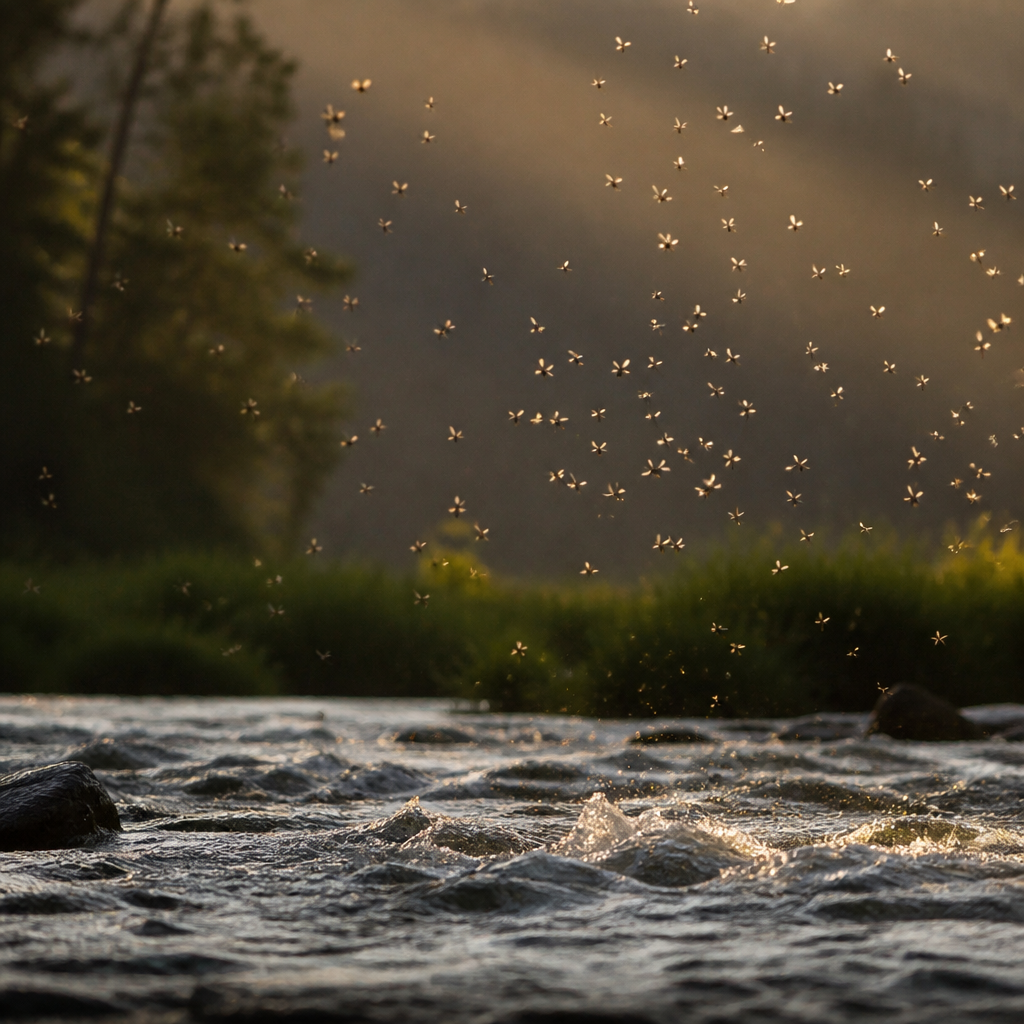
Four groups carry the year. Midges are present every month. Mayflies dominate late winter, spring and late autumn. Caddis dominate from April to September. Stoneflies matter from May to July, with the large orange October caddis closing the season in September and October. Carry each group in three sizes and you are covered.
The chart
Dates below describe a typical year in the canyon between Mount Shasta City and Shasta Lake. The lower reaches near the lake run one to three weeks ahead of the upper reaches, and the spring fed Lower McCloud runs on a flatter, later schedule of its own.
| Month | What is likely on the water | Stage that gets eaten | Hook sizes |
|---|---|---|---|
| January | Midges, occasional blue winged olives | Pupa and emerger, fished deep and slow | 18 to 22 |
| February | Midges, blue winged olives, first March browns | Nymph, then emerger on grey afternoons | 14 to 20 |
| March | March browns, blue winged olives, midges | Nymph and dun, best in poor weather | 12 to 18 |
| April | March browns fading, blue winged olives, first caddis | Nymph deep, dun in slow water | 12 to 18 |
| May | Caddis building, little yellow stones, pale morning duns start | Caddis pupa and stonefly nymph | 10 to 16 |
| June | Caddis heavy, golden stones, pale morning duns | Pupa in the day, adult at dusk, big nymph anytime | 8 to 16 |
| July | Caddis, golden stones tailing off, pale morning duns, terrestrials | Dry dropper, ant and beetle along the banks | 10 to 18 |
| August | Caddis, terrestrials, midges | Small nymphs early, hoppers and ants on the edges | 12 to 20 |
| September | October caddis begins, caddis continue, first autumn olives | Large orange pupa swung to the bank | 8 to 18 |
| October | October caddis peak, blue winged olives | Large orange dry at dusk, small olive dun by day | 8 to 20 |
| November | Blue winged olives, midges, late October caddis | Nymph deep, dun on overcast afternoons | 16 to 22 |
| December | Midges, occasional olives | Pupa and small nymph, slow water | 18 to 22 |
How to read it without being misled
Three cautions make the difference between a chart that helps and one that sends you home empty handed.
- Elevation shifts everything. The same insect can be a fortnight apart between Delta at the bottom of the canyon and Mount Shasta City at the top.
- Water temperature, not the date, triggers a hatch. A cold spring pushes everything back. A warm one pulls it forward. Take a reading, as described on the water temperature page.
- Presence is not availability. Golden stonefly nymphs live in the river all year but crawl to the bank to hatch, so the adults are rarely available in open water while the nymph always is.
The four groups, in practical terms
Mayflies
The two that matter are the small dark blue winged olive, which hatches in bad weather from late winter into spring and again in October and November, and the larger March brown of late winter and early spring. Pale morning duns fill the early summer afternoons. All three are best met with a nymph first and a dun second.
Caddis
The dominant insect group of the summer, and the most commonly misfished. During a heavy caddis emergence the trout are usually taking pupae just under the surface, not adults on it, which is why a soft hackle swung across the current beats a dry fly so often. The technique is described in the techniques section.
Stoneflies
Golden stones and little yellow stones from May to July, and the big orange October caddis, which is technically a caddis but is fished like a stonefly, in September and October. The nymphs are large, they live in exactly the fast broken water these rivers are made of, and a heavy stonefly nymph is a legitimate searching pattern in any month.
Midges
Small, constant, and ignored by most anglers. In January and February they are frequently the only game available, and in the flat tails of pools in summer they account for a surprising number of the fish that refuse everything else.
And on the McCloud
The Lower McCloud runs the same cast of insects on a flatter schedule, because its temperature moves so little. In practice that means the caddis and stonefly season is broader and less peaked, the October caddis is a genuine event, and the deep, dark canyon water rewards a heavier nymph than the Sacramento does. The short list of patterns that earn their place there is on the page about the best flies for the McCloud River.